The Artful Embodiment: Understanding Women’s Adornment Across Culture, Religion, Science & Spirit
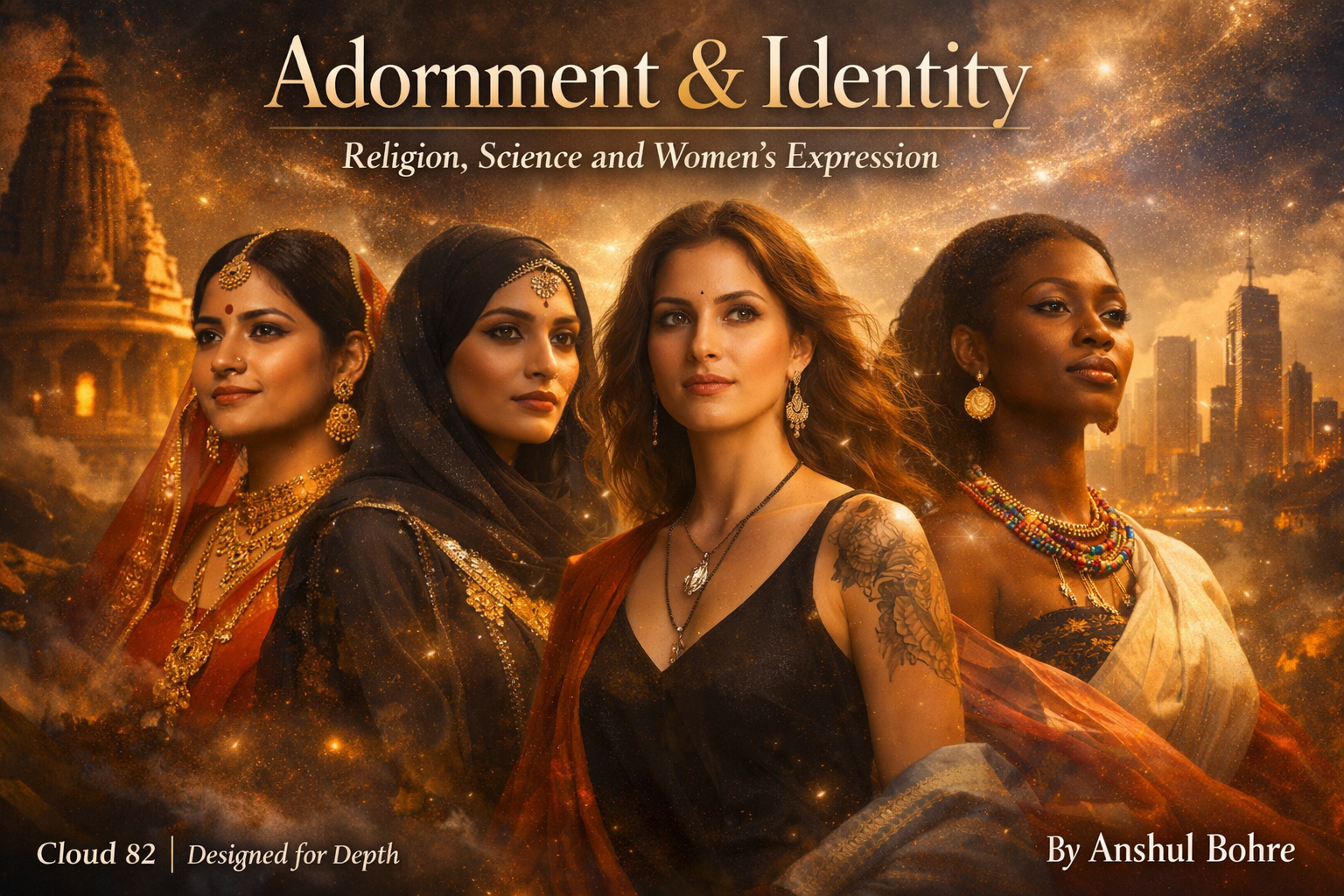
Human beings have adorned themselves since antiquity — not merely for beauty, but as a living narrative of identity, belief, health, community, and meaning. For women around the world today, ornaments, metals, crystals, piercings, tattoos, and clothing are more than accessories — they are symbols that carry cultural memory, spiritual resonance, scientific interpretations, aesthetic value, and personal expression.
This blog explores why women wear what they wear — from the Vedas and religious traditions to modern scientific perspectives, from Sanatan culture and global religions to medical science and anthropology — connecting these insights to Cloud 82’s philosophy of celebrating human experience, freedom of expression, and holistic understanding.
1. Ornamentation in Vedic and Sanatan Culture
In Sanatan Dharma and Vedic literature, adornments were never arbitrary. They were often tied to dharma, rupa (beauty), shakti (energy), and cosmic balance. Although ancient Sanskrit texts like Nātya Shastra and Manasollasa meticulously list ornaments for women from head to toe — gold and gemstone necklaces, earrings, armlets, girdles, anklets, bangles, sacred marks (like tilaka), and more — they typically do not include certain later-adopted pieces such as nose rings. The complete, canonical lists are found in classical treatises on art and aesthetics rather than devotional texts alone.
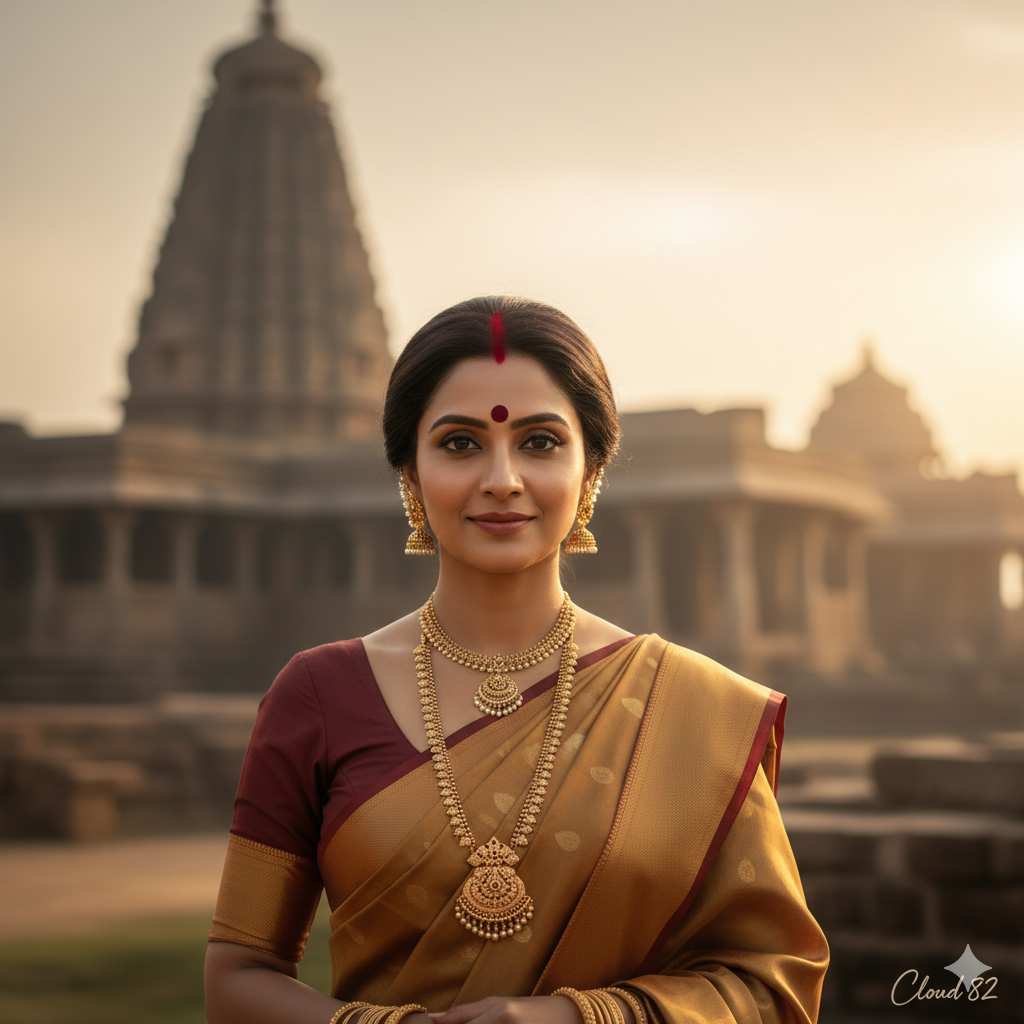
Sacred Marks and Symbolic Ornaments
- Tilaka / Tika: A forehead mark associated with the Ajna Chakra or the “third eye,” worn for spiritual protection, ritual purity, identity of sect or tradition, and blessings. Different shapes and materials (sandalwood paste, clay, ash) signal different religious affiliations and devotional contexts.
- Bangles and Bracelets: In Hindu tradition, bangles worn by women are linked to marital status and auspicious energy, often symbolizing continuity, prosperity, and positive vibrations.
- Toe Rings (Bichiya): Traditionally worn on the second toe of married Hindu women, symbolizing marital bliss and also linked in Ayurveda to reflex pathways connecting to reproductive organs.
These ornaments were also deeply tied to rituals of life — birth, puberty, marriage, and other transitions — as expressions of society, family, and cosmic rhythm.
2. Religion and Adornment: Global Perspectives
Adornment in religion often connects symbolism, community identity, and spiritual perception.
Hinduism
Gold and silver are not just precious; they are spiritually symbolic — gold representing purity, prosperity, and Lakshmi, the goddess of abundance, while silver is associated with the moon and cooling, balancing energies. These metals appear in temple iconography and devotional practices because they are believed to energize and purify.
Abrahamic Traditions
In the Bible, wearing ornaments like earrings, crowns, or a “ring on your nose” were sometimes used metaphorically to express blessing, affection, or divine favor.
Buddhism and Prayer Beads
Beads such as malas (rosaries) in Buddhist practices are worn or carried as aids in meditation, prayers, and mindfulness — signifying focus, intention, and sacred remembrance in daily life.
Indigenous and Tribal Traditions
Across Africa, Polynesia, the Americas, and Asia, ornaments, tattoos, and body modifications often encode messages of lineage, spirituality, status, rites of passage, protection, or ancestral connection. For instance, tribal tattoos in India’s indigenous communities function as identity markers and spiritual symbols tied to life stages and cultural narratives.
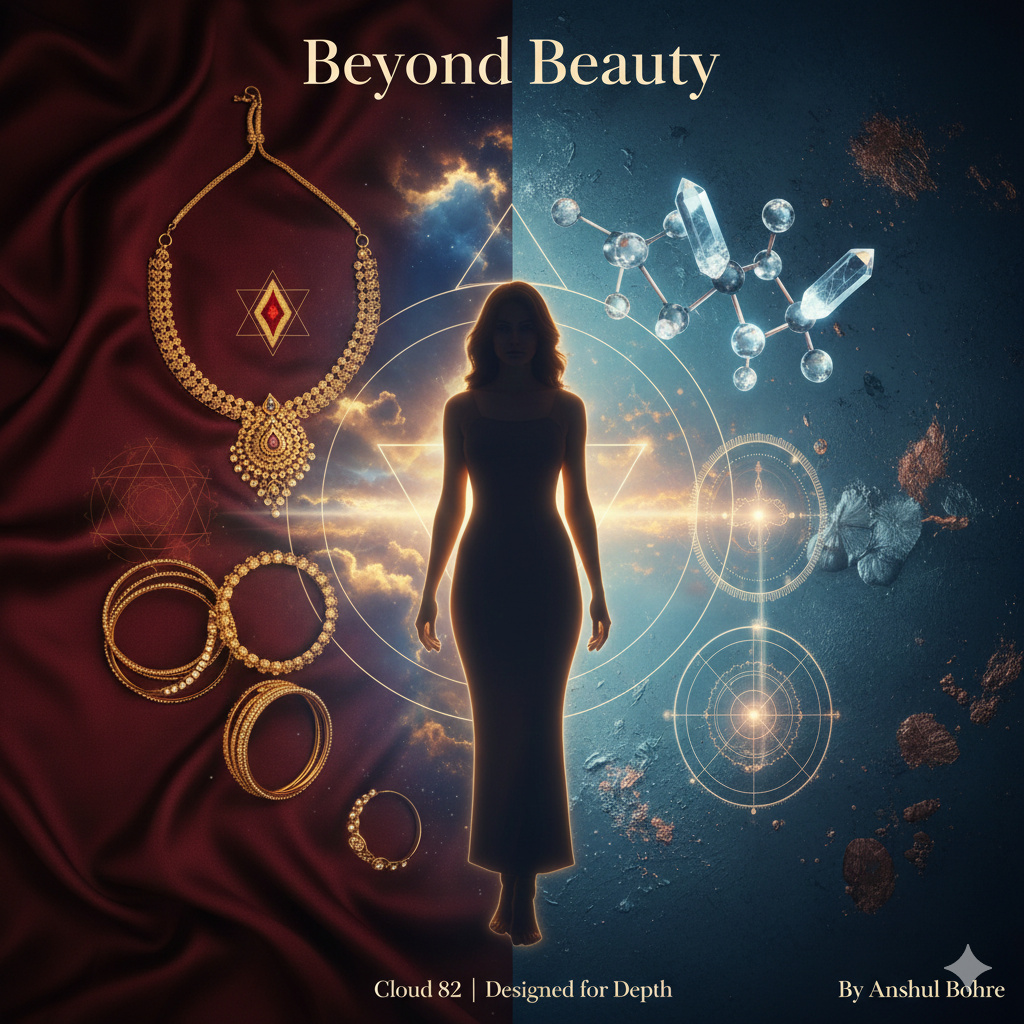
3. Metals & Crystals: Science Meets Symbolism
While cultural narratives ascribe deep meaning to precious metals and crystals, science gives us a material and energetic language for understanding them.
Metallurgy and Jewelry Science
The field of metallurgy explains how metals like gold, silver, copper, and alloys are worked into durable, beautiful adornments. Gold, resistant to corrosion and tarnish, has historically been used because its chemical stability and luster made it a powerful visual and symbolic medium for human societies.
Crystals and Energy
Crystals — defined by their precise molecular arrangements — have measurable electromagnetic properties. Quartz, for example, is used in precision clocks and electronics due to its vibrational stability. Many people extend this scientific property into a metaphoric and experiential framework, using crystals as tools for meditation, balance, and intention because of how they store and transmit energy.
Crystals like rose quartz or amethyst also carry symbolic meanings rooted in ancient traditions (healing, love, protection) that still resonate in contemporary adornment and wellness cultures.
4. Tattoos and Piercings: Culture, Identity & Science
Historical Significance
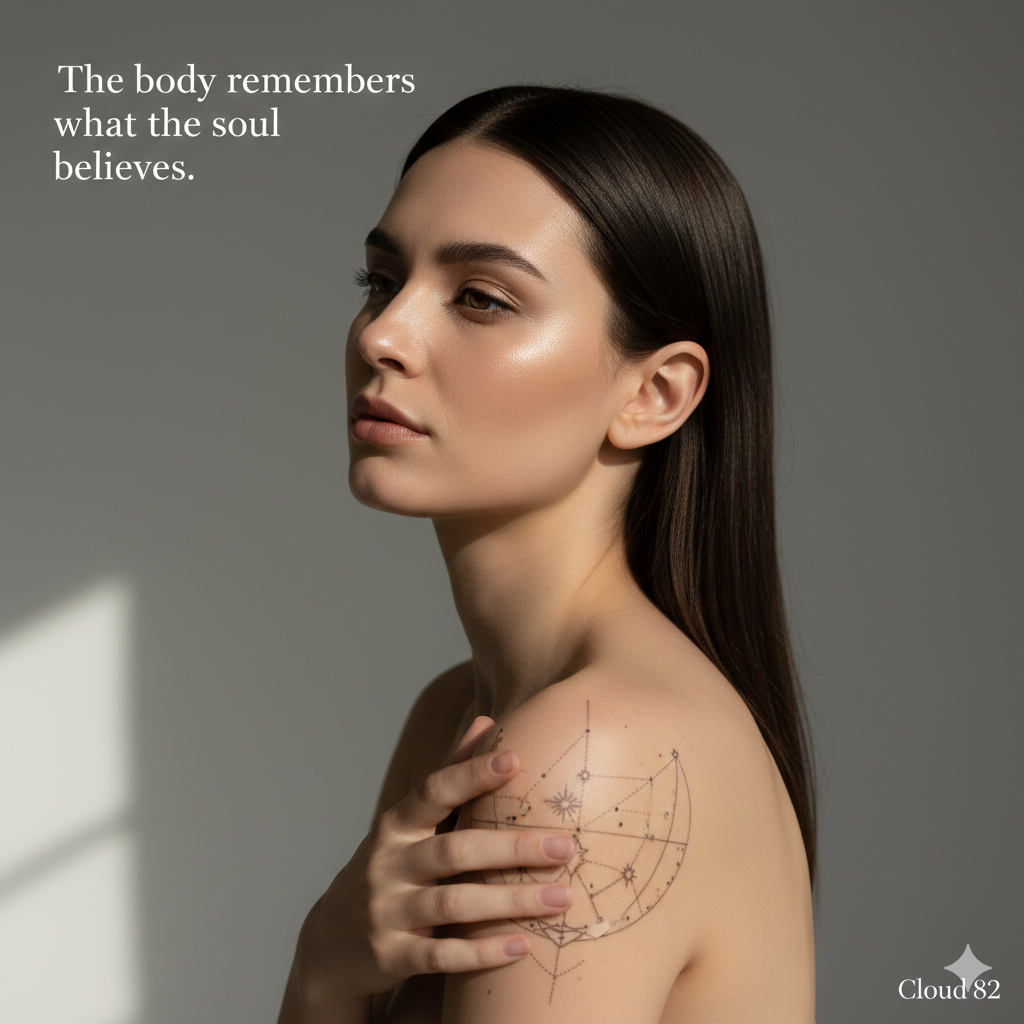
Tattoos and piercings are among the oldest forms of body adornment worldwide. Tattoos on mummified remains like Ötzi the Iceman show that marking the body with ink predates written history. Across cultures — from ancient Egypt to Polynesia to Americas — tattoos were used for status, protection, spiritual association, and identity.
Modern Motivations
Contemporary research identifies multiple motivations for tattoos and piercings:
- Self-expression and identity
- Commemoration of personal stories or beliefs
- Affiliation with subcultures or communities
- Aesthetic choice and fashion
- Reclamation of autonomy or body narrative
These practices have evolved from strictly ritualistic or cultural signals to forms of personal and artistic expression — bridging past and present.
5. Clothes as Living Culture
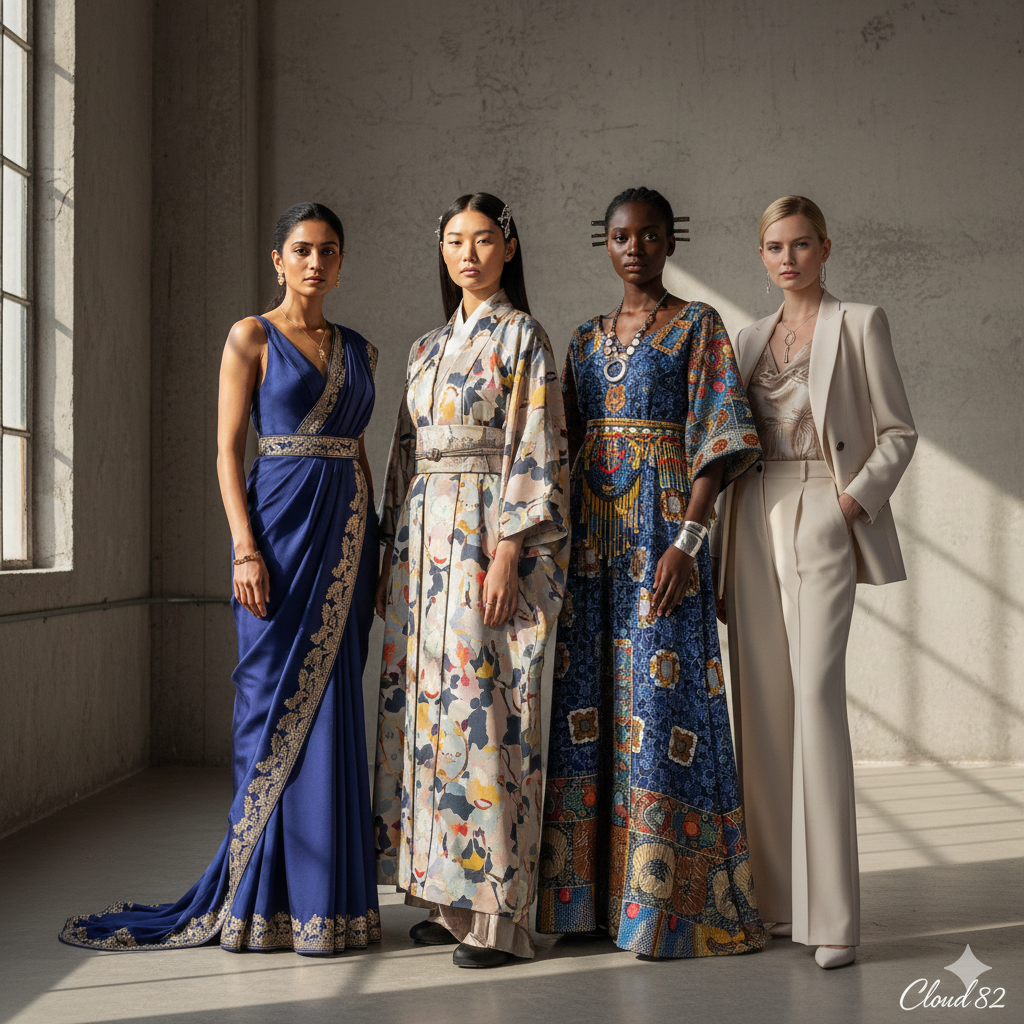
Clothing styles — from saris and kurtas to global fashion ensembles — are textile narratives. They reflect tradition, history, environmental conditions, identity, class, and evolving taste. Clothes allow women to dress into their identities, whether rooted in religion, professional roles, artistic spirit, or contemporary cosmopolitan expression.
6. Medicine, Health & Modern Science
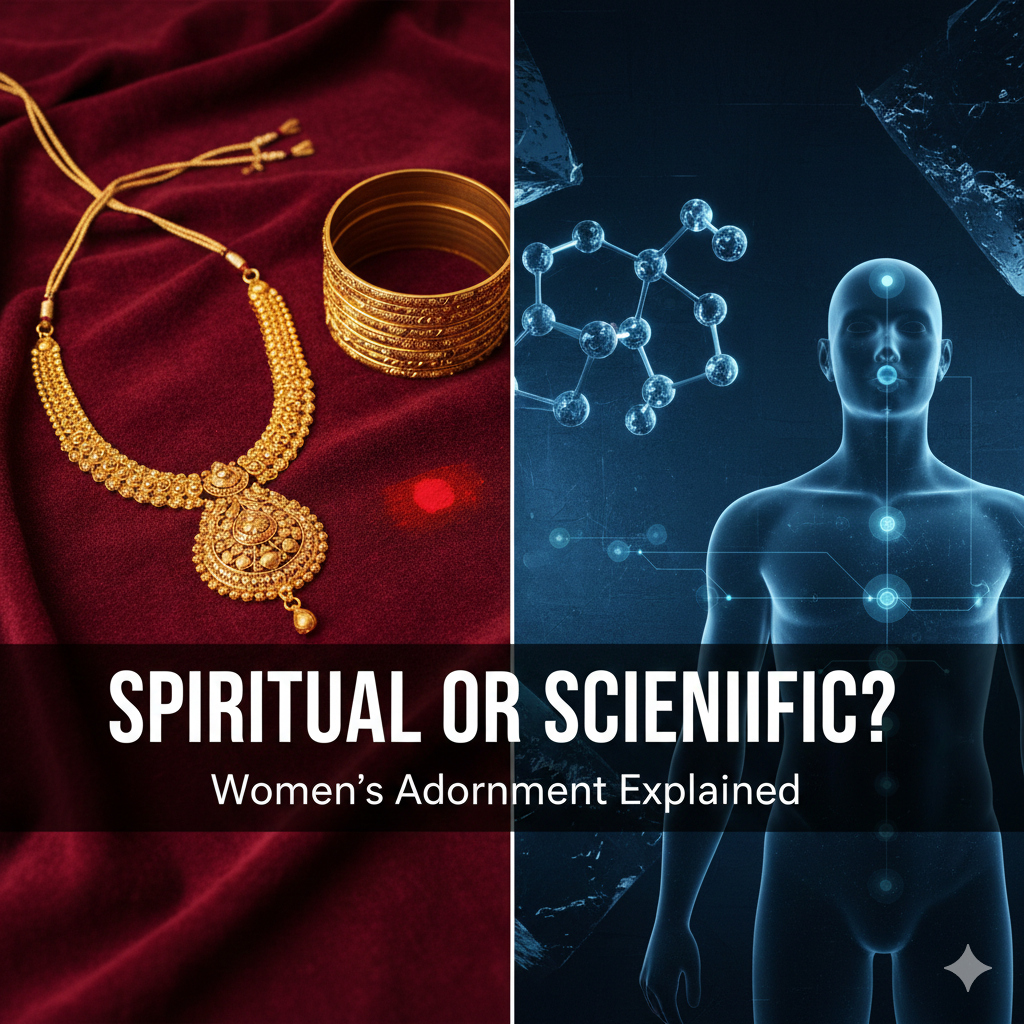
Several traditional beliefs about ornaments have roots in physiological effects:
- Bangles were thought to influence blood circulation through friction at the wrist.
- Toe rings were linked to nerve stimulation connected to reproductive health.
- Metals like copper and silver have known antimicrobial and circulatory influences in medical science — though traditional claims extend into energetic interpretations that require further integration with modern clinical data.
Scientists today regard these effects through both bio-physical frameworks and psychological benefit models — acknowledging that wearing meaningful objects often has a real impact on confidence, emotional regulation, and social perception.
7. Art, Culture & Aesthetic Expression
Adornment is, at its heart, human art made wearable:
- Jewelry is sculpture, metalwork, and gemstone art.
- Tattoos are narrative murals on the body.
- Clothing is culturally coded wearable art.
- Crystals and charms are symbolic performance pieces in daily life.
Artistic interpretation transforms material into meaning — and women across cultures use these tools to shape their self-expression, belonging, and beauty signature.

Why Women Adorn Themselves Today
Patterns of adornment today are multi-layered:
- They honor ancestral traditions.
- They reflect religious and spiritual belonging.
- They incorporate scientific knowledge about materials.
- They serve personal narrative and identity.
- They act as aesthetic and cultural statements.
Adornment is not superficial; it is an ongoing dance between the body, history, belief, science, and creative spirit — a fitting reflection of the Cloud 82 ethos: live freely, explore deeply, and express the fullness of human experience.
❓ FAQ
1. Why do women wear ornaments according to Vedic or Sanatan culture?
In Sanatan philosophy, ornaments symbolize energy alignment, marital status, prosperity, and spiritual identity. Metals like gold and silver are associated with cosmic elements and auspicious vibrations.
2. Is there any scientific basis for wearing metals like gold, silver, or copper?
Yes. Gold is chemically stable and non-reactive, silver has antimicrobial properties, and copper is studied for circulatory and anti-inflammatory potential. However, many traditional energetic claims remain culturally symbolic rather than clinically conclusive.
3. What is the spiritual meaning of crystals in modern fashion?
Crystals such as rose quartz or amethyst are associated with emotional balance and mindfulness. Scientifically, crystals have structured molecular lattices and vibrational properties; spiritually, they are used as intention-setting tools.
4. Are tattoos and piercings religious or cultural?
Both. Historically, tattoos marked rites of passage, protection, and identity in tribal societies. Today, they are also artistic and personal expressions of autonomy and storytelling.
5. Why is clothing considered a form of adornment?
Clothing reflects cultural identity, social belonging, aesthetics, climate adaptation, and psychological expression. It is wearable narrative art.

anshulbohre.com/blog

Dreams, Lucid Dreaming & Parallel Universes: Can Consciousness Travel Across Dimensions?

Humanitarian Governance: Reimagining Democracy for Five Generations
Equinox: The Art of Balance

Tolerance: How It Reduces Stress, Crime & Social Conflict

The Science of Soulmates: Are Soulmates Found or Created?